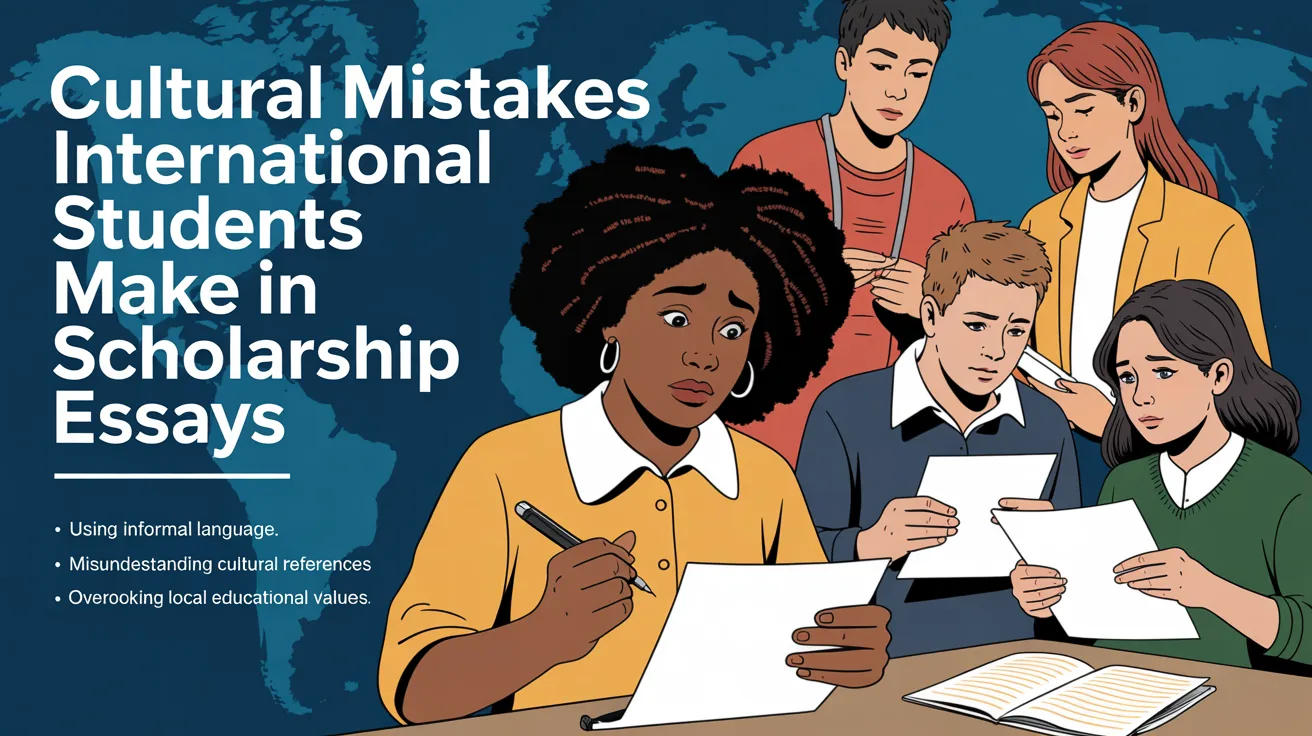
When you’re applying for an international scholarship, you’re not just writing across distance — you’re writing across cultures.
What sounds normal, respectful, or impressive in your context may come across very differently to a reviewer in another country. And most of the time, applicants don’t even realize it’s happening.
These aren’t “big” mistakes. They’re subtle. But they can affect how your essay is read, especially when the competition is tight.
Here are some of the most common cultural missteps — and how to avoid them.
1. Being Too Formal or Distant
In many cultures, formal writing is a sign of respect. So applicants use very polished, almost rigid language in their essays. This will only make the essay feel distant.
Phrases like “I humbly wish to state” or “I am highly honored to apply for this prestigious opportunity” show up often — but they don’t add much meaning. They create space between you and the reader instead of connection.
Most scholarship essays, especially in Western contexts, are expected to sound clear and direct. Respect doesn’t come from big words. It comes from clarity and sincerity.
2. Avoiding Personal Voice
Some applicants are taught not to talk too much about themselves. They focus on institutions, teams, or general ideas instead of their own role. But scholarship essays are personal by design. The reviewer is trying to understand you — your decisions, your thinking, your direction.
If your essay avoids “I” too much or stays overly general, it becomes difficult to see what you actually did or contributed. It’s okay to be specific about your role. That’s not arrogance, it’s clarity.
3. Overemphasizing Hardship Without Reflection
In some cases, applicants feel they need to present their background in the most difficult way possible to be taken seriously. While personal challenges can be important, essays that focus only on hardship without showing reflection or growth can feel incomplete.
What matters is not just what you went through, but:
- How you responded
- What changed
- What you learned
Without that, the story doesn’t move forward.
4. Being Too Indirect
In some cultures, communication is naturally indirect. You build up to a point slowly, or imply meaning rather than stating it directly.
In scholarship essays, this can cause problems.
If your goals, intentions, or achievements are not clearly stated, the reviewer may miss them entirely. They’re reading quickly and don’t have time to interpret subtle hints. Clarity helps your application. Say what you mean, especially when it comes to your goals and plans.
5. Over-Praising the Scholarship
Respect for institutions can sometimes turn into over-praise in essays. Long sections about how prestigious the scholarship is, how honored you are, and how life-changing it would be are very common — and rarely effective.
Scholarship committees already know their value. What they want to understand is how you fit into that picture. A brief acknowledgment is enough. The focus should stay on your journey and your goals.
Final Thought
Cultural differences in writing are normal. They don’t make your application weaker — but they can make it harder to interpret if you’re not aware of them. The goal isn’t to change who you are. It’s to communicate your story in a way that is clear to someone from a different background.
When your writing is direct, specific, and grounded in real experiences,
it becomes easier to read — and easier to remember.